
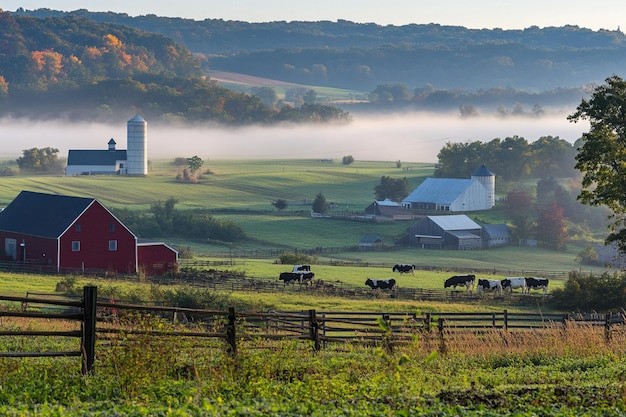

Recently, a client approached us after receiving information about an opportunity to invest in farmland. At first glance, the concept was appealing. Farmland may provide greater portfolio diversification because its returns are driven by factors that differ from those influencing traditional stocks and bonds. That led us to a broader question: Does private farmland actually make sense as an investment for individual investors?
We decided to take a closer look at the asset class and thought our audience may be interested in what we found.
Why Farmland Attracts Investors
Farmland has several characteristics that make it attractive as an alternative investment.
First, it is a finite resource. While the world’s population and demand for food continue to grow, the amount of land suitable for productive agriculture is limited. This supply-and-demand dynamic has historically supported farmland values.
Farmland can generate returns in two ways: income and appreciation. Land may generate rental income from farmers operating the property, while the underlying value of the land can appreciate over time.
Farmland has also historically exhibited relatively low correlation with traditional financial markets. Because agricultural land is influenced by factors such as crop prices, food demand, weather, interest rates, and land availability, its performance does not necessarily move in lockstep with the stock market.
This potential diversification is arguably the strongest reason an investor might consider farmland.
Looming Illiquidity
Historically, institutional farmland investments have produced attractive returns. The NCREIF Farmland Property Index, which tracks privately owned institutional farmland, has generated approximately 10.7% average annual returns from 1991 through 2021. It is important to note, however, that this is an index of property-level investment performance and should not be interpreted as the return an individual investor would receive after fees, expenses, and other investment costs. A historical return of approximately 10% sounds attractive. But return alone does not tell the entire story.
Consider an investor who can potentially earn a similar long-term return from an investment that can be bought and sold every trading day. That investor has considerably more flexibility than someone investing in a private farmland partnership that may require an eight- to twelve-year commitment.
This creates what economists refer to as an illiquidity premium. Investors may be compensated for giving up access to their capital, but the premium needs to be large enough to justify the additional risk and inconvenience. For example, an investor should not look at a historical farmland return of roughly 10% and automatically conclude that farmland is more attractive than the S&P 500. The appropriate comparison should consider not only the expected return, but also liquidity.
In other words, a 10% return from an illiquid private investment is not equivalent to a 10% return from a liquid public investment.
Who’s in Charge??
Another potential setback for private investment in farmland is manager risk. The investor is relying on a manager to identify attractive properties, conduct due diligence, structure the investment, oversee agricultural operations, manage relationships with farmers and tenants, and ultimately sell the property at an attractive price. Publicly traded investments are subject to disclosure requirements that are not necessarily required of private farmland investments. The lack of legal disclosure requirements and blind reliance on management could leave investors in the dark.
There are, of course, institutional farmland managers with decades of experience and billions of dollars invested in agricultural assets. For example, Nuveen Natural Capital reports more than $11 billion in farmland assets under management and more than 39 years of farmland investment experience. Manulife Investment Management reports approximately $4.1 billion in agriculture assets and has been investing in agriculture since 1991. However, these organizations operate on a dramatically different scale than many newer private farmland investment platforms, and often the barriers to entry due to high initial investment requirements are too steep for your average investor.
That does not mean that a smaller manager cannot generate attractive returns. But it does add manager risk in addition to the underlying risks of farmland itself. When evaluating a private farmland investment, investors should consider the manager’s experience, assets under management, historical results, investment process, fees, leverage, diversification, valuation procedures, and track record through different market environments.
When the Harvest Runs Thin
The third and final major risk to private investment in farmland is the product itself. Farmland is not a low-risk investment. Weather is an obvious risk. Droughts, floods, hurricanes, and extreme temperatures can all affect crop production and profitability. Other risks include water availability, crop disease, labor shortages, changes in government agricultural policy, rising operating costs, interest rates, and changes in the value of agricultural land.
Commodity prices can also fluctuate significantly. A farm may produce a strong harvest but still experience lower profitability if the market price for its crops declines.
Finally, there are investment-specific risks. Private farmland investments may have acquisition costs, management fees, operating expenses, financing costs, and other charges that reduce the return ultimately received by investors.
Farmland as a Diversifier, Not a Replacement
After researching the asset class, we believe the strongest argument for farmland is diversification. For the average investor, a diversified portfolio of stocks and bonds should remain the foundation of a long-term investment strategy. Public markets provide liquidity, transparency, diversification, and relatively low-cost access to thousands of companies and securities.
Farmland offers something different. An investor with a $2 million portfolio, for example, could potentially allocate $25,000–$50,000, or roughly 2% of the portfolio, to a private farmland investment. At that level, the investment could provide exposure to an alternative source of return without becoming a major component of the overall portfolio. The key is that the allocation should be sized appropriately. An investor should not sacrifice necessary liquidity or significantly reduce a diversified stock and bond allocation simply to gain exposure to farmland.
Final Thoughts
There is a legitimate investment case for farmland as a diversifier. Farmland may be an appropriate complement to an existing portfolio for investors who have sufficient liquidity, a long investment horizon, and an interest in diversifying into real assets. The relatively low correlation with traditional investments can also make it an interesting source of portfolio diversification.
That said, investors should be aware that private farmland is illiquid and carries manager-specific and agricultural risks. An investor considering farmland should ask whether the potential benefits are sufficient to justify committing capital for many years when other investments may offer similar long-term return potential with substantially greater liquidity.
For that reason, we would generally view private farmland as a potential diversifier within an already well-constructed portfolio—not as a replacement for traditional investments such as stocks and bonds.
At Detterbeck Wealth Management, we continuously evaluate alternative investments that may provide meaningful diversification within a client’s broader financial plan. Our Bootcamp process is a comprehensive four- to five-session planning experience designed to examine each client’s financial and personal circumstances. Through this process, we help determine whether alternative investments are appropriate and, when they are, how they may fit within an overall investment strategy designed to support each client’s long-term goals.