
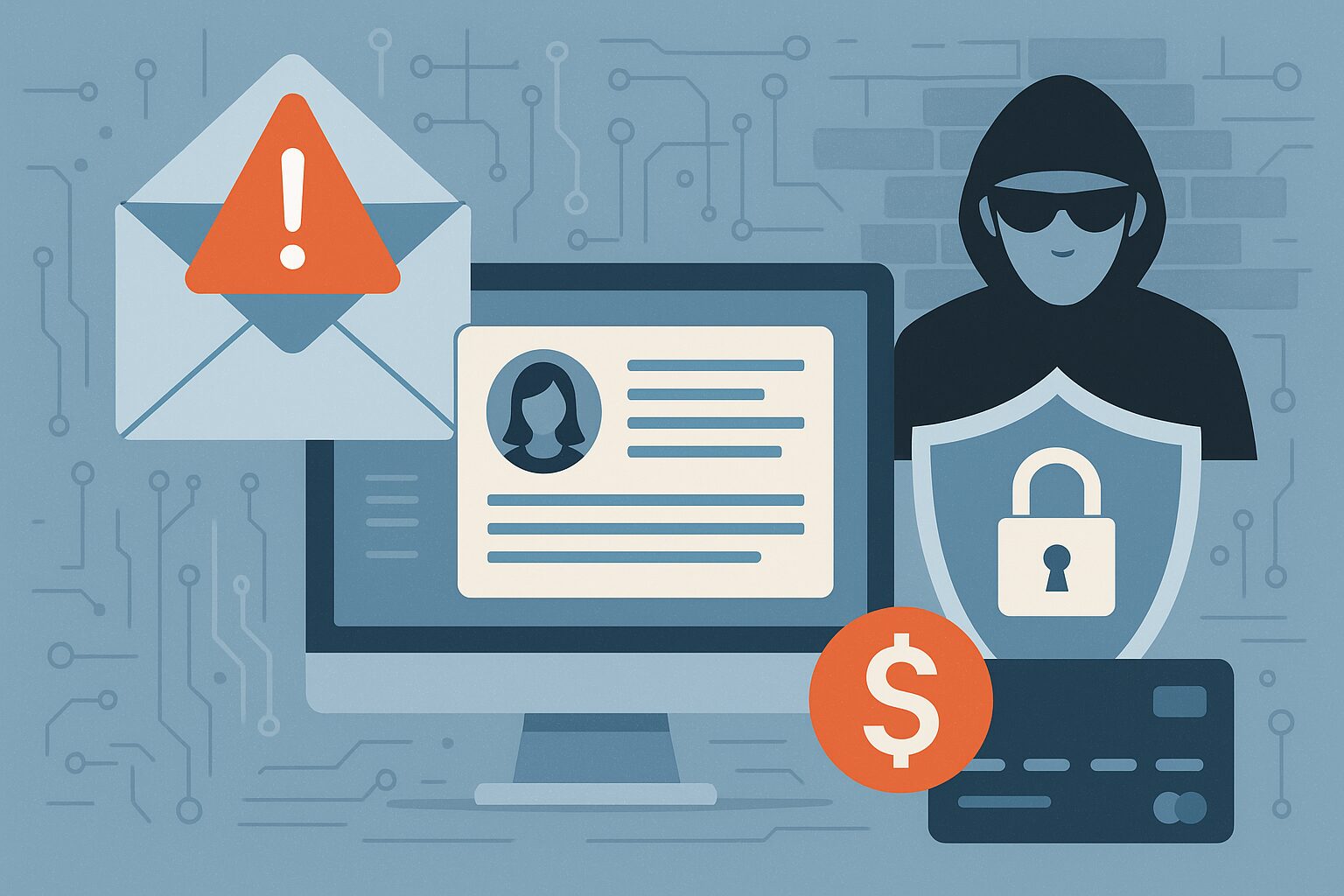

In today’s digital world, even the most cautious and tech-savvy individuals can become targets of cybercriminals. Recently, one of our clients experienced a sophisticated email impersonation scam — a stark reminder that vigilance remains our best defense.
A Real-World Example
A trusted client received word that a fraudster had sent messages pretending to be her, requesting a $50,000 ACH transfer from a business associate. The fake email used her name (with a subtle misspelling in the address) and referenced real colleagues to appear legitimate.
The next day, the scheme escalated: the attacker impersonated one of our team members, using a counterfeit address ending in “.net” instead of our legitimate “.com” domain. The fraudulent message stated that a transfer had already been made and included realistic firm branding and disclaimers — all designed to gain trust.
Thankfully, both our client and her contact recognized red flags quickly and reported the messages before any money was lost.
How These Attacks Work
Cybercriminals use information from data breaches, LinkedIn profiles, and prior correspondence to craft convincing impersonations. They often:
- Create lookalike email addresses that differ by only a character or two.
- Reference recent projects, colleagues, or transactions.
- Imply urgency — such as “urgent wire” or “ACH transfer today.”
In some cases, they even compromise legitimate email accounts, silently monitor conversations, and strike when the opportunity arises.
How These Attacks Are Evolving
Today’s cybercriminals aren’t just sending sloppy phishing emails. They’re using artificial intelligence (AI) to make their attacks smarter, faster, and more convincing. AI allows fraudsters to:
- Write flawless, personalized messages that mimic real communication styles.
- Generate realistic logos, email signatures, and even fake websites.
- Use voice cloning and deepfakes to impersonate trusted professionals.
As technology improves, so will the sophistication of these scams. That’s why our vigilance has to improve too — from carefully inspecting email details to confirming any financial requests in person or over the phone.
DWM’s Cybersecurity Safeguards
At Detterbeck Wealth Management, client protection is our top priority. We have:
- Strict verification procedures for all money movement instructions.
- Trained staff who know how to spot and respond to suspicious communications.
- Secure internal systems and multifactor authentication across all accounts.
- Ongoing cybersecurity education for our team and our clients.
Even so, technology alone cannot eliminate every threat. The most powerful defense is awareness.
What You Can Do to Protect Yourself
To safeguard your information and assets:
- Verify requests independently. Call or text the known contact using a saved number before acting on an email requesting money or sensitive data.
- Check the sender’s address carefully. Watch for slight spelling differences or fake domains (like “dwmgmt.net” instead of “dwmgmt.com”).
- Enable multifactor authentication (MFA) on your email and financial accounts.
- Avoid clicking links or downloading attachments from unverified emails.
- Regularly monitor account logins and devices connected to your email or bank account.
- Report phishing attempts to your email provider — for Gmail, you can use Google’s abuse report form.
Final Thoughts
AI is transforming many industries for the better — including ours — but it’s also giving criminals new tools to exploit trust. The key takeaway is that security awareness must evolve alongside technology.
By slowing down, verifying before acting, and maintaining open communication, we can stay ahead of these threats.
At DWM, we’re here to help you protect what matters most — not just your investments, but your peace of mind.